
Written by Dr. PennElys Droz, Anishinaabe-European descendent and BioFi Project Contributor; editing by Félix de Rosen, Samantha Power and Nick Paul.
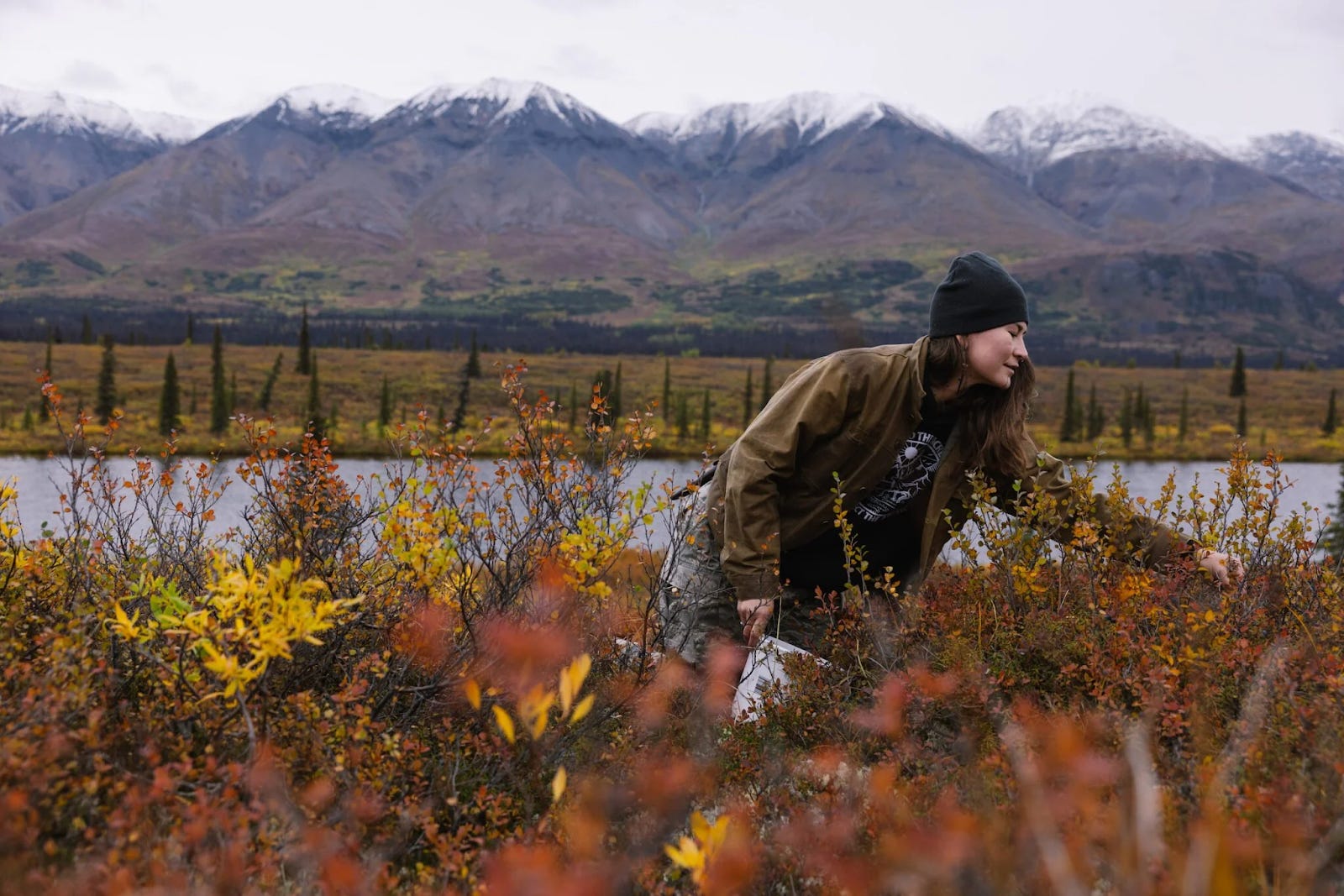
Across the vast expanse of Alaska—from the tidal rhythms of Bristol Bay where sockeye return by the millions, through the boreal forests and along the braided rivers that connect coast to interior—the Smokehouse Collective harvests, processes, and distributes salmon to communities impacted by climate change and the disruptions of the commercial salmon fishery. The Collective has hosted harvest camps, developed an Indigenous food processing facility and, through volunteer networks, portable freezer technology, and partnerships with local airlines, is working to rebuild an Indigenous-led economy based in community care and responsibility.
At its simplest, an economy is the way we provide for our people – both in the act of gathering resources and in the social agreements that guide how they’re distributed. An economy, at heart, is an expression of cultural values. Ruth Miller and Deenaalee Hodgson, Smokehouse Collective co-directors, emphasize that gathering around salmon, traditional practices, and trade naturally builds the relationships and weaves the knowledge that are key to creating thriving futures - particularly in the face of climate disruption. The Smokehouse Collective is one expression of a broader movement: Indigenous communities across Turtle Island/North America and beyond are revitalizing traditional economies and trade networks, reclaiming the economic agency that colonialism sought to destroy.
But given the scale of transformation necessary in the face of collapsing ecological and economic systems, we need to build power through intercultural coalitions between Indigenous communities and bioregional organizers that ground economic transformation in the relational, land-based values both movements share. Bioregionalism aspires to center place-based knowledge and ecological relationships, yet the movement cannot fulfill its own principles without engaging peoples whose knowledge of bioregions has been shaped by deep, sustained relationship with the land. How do we build these coalitions in ways that strengthen rather than undermine Indigenous agency?
Agency and Transformation
That question has guided my work for years. As an interethnic person raised in Indigenous culture and community, I serve as a justice-centered, intercultural navigator — a community-guided designer, scientist, and organizer. And the answer, I believe, starts with understanding what agency actually means.
Agency is a community’s collective capacity to shape their own destiny: the governance systems they live under, the material conditions they inhabit, and the future they build, all aligned with their values and land-based responsibilities. Colonial powers systematically stripped this capacity through land theft, enclosure of the commons, and erasure of community governance, creating economic dependency that forced individuals into the wage economy. If agency is a people’s capacity to shape their lives, then economic agency is their capacity to shape resource distribution and trade networks - the material foundation that makes all other forms of agency possible. We cannot speak about reclaiming agency without reclaiming economic agency: revitalizing traditional economies and trade rooted in Indigenous values is essential for broader movements for Indigenous sovereignty.
Indigenous communities have connected with each other through extensive trade routes across continents and oceans for millennia. Modern highways are often simply paved-over Indigenous trade routes that once connected hubs for reciprocal exchange of the land’s gifts, language, knowledge, and teachings. The routes have memory, and work is underway across the Indigenous world to renew them and uplift the trade that has persisted since pre-colonial times despite great violence to both communities and ecosystems. This work builds on the powerful legacies of ancestors and elders who refused assimilation and stood up for Indigenous rights to homelands and self-governance—from resisters like John Blackbird, who refused to confine hunting and fishing to reservation lands, to Arthur Manuel, the Secwepemc leader who advocated fearlessly for Indigenous rights to full economic power and land.
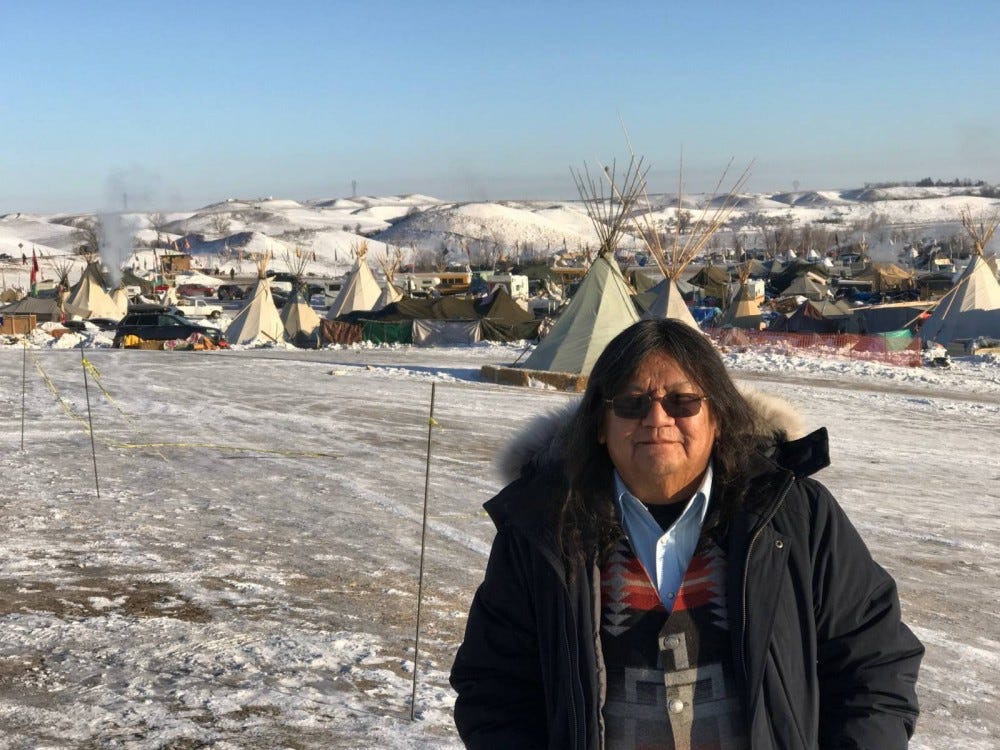
In the Mexico-US border region of Sonora, Indigenous women have built a trade network extending across the border, creating a community “tianguis,” or market, that brings agricultural and other products from Indigenous communities across Mexico to Arizona on Indigenous terms. When I spoke with Nicole Yanes, one of the organizers, she reflected on a core challenge: much of the traditional knowledge around product valuation has been lost. With prices now determined by global markets that lack relationality, Indigenous communities must gather knowledge from elders in order to re-develop valuation standards based on reciprocity.
Yanes’s work extends beyond recovering traditional knowledge. In this era of military-backed corporate capitalism, she emphasizes the necessity of creating large-scale Indigenous trade systems that operate without nation-state currencies like the dollar or peso—and of rebuilding the infrastructure to support them: trading ports, governance frameworks, trade agreements, and transportation networks.
The Standing Buffalo Dakota Nation in Saskatchewan is doing just that, working to renew an old trade corridor connecting traditional Dakota, Lakota, and Nakota territories across Canada and the US. This corridor will establish tariff-free international and intertribal supply chains across the US-Canada border with Indigenous consultation frameworks and environmental oversight. The Nation has signed an initial agreement with the Fort Peck Sioux Tribes in Montana, and is moving ahead with infrastructure development.

In Mexico, the Colectivo Indígenas 3D, representing 30 different Indigenous Peoples, addresses pressing problems Indigenous peoples experience in trade: lack of marketing spaces, abusive intermediaries, and dismantled marketing chains. They have developed an anti-capitalist market strategy through four stages: creation of the Raíz de la Tierra Indigenous store in Mexico City; the Indigenous Marketing Network connecting artists and producers; training in financial and decolonial healing around money trauma; and creation of a savings bank evolving into cooperative banks. As a result, they are rebuilding supply chains and financial infrastructure grounded in Indigenous values.
The Opportunity of Indigenous-Bioregional Economic Alliance
Indigenous communities are already creating the economic infrastructure necessary for self-determination. What movements outside Indigenous communities share the values that could support this work?
The principles guiding bioregional economics emerge from systems thinking, living systems science, permaculture, and the study of resilience, which finds correlation with Indigenous teachings and practices. Bioregional economies are organized within bioregions—areas defined by distinct geological, ecological, and cultural boundaries. Bioregional economics emphasizes localization of resource governance and planning to combat the ecological destruction, centralized political power, and inefficient decision-making inherent in extractivist economies. When the people making economic decisions also feel the direct results of those decisions, social, economic, and ecological care and responsibility are much more likely to follow.
Bioregional economies are designed to function like healthy watersheds, which receive rain, slow it down and spread it out—allowing moisture to recharge the system before releasing excess. Similarly, healthy economies receive resources—including money—slow it down, cycle it within the system, spread it equitably, and recharge people’s savings before it is recirculated or “spent” further. The foundational values central to bioregionalism since its founding in the late 1960s include equity, reciprocity, looking to Land as guide, localized collective decision-making, and recognition of Earth’s living presence.
I believe bioregional values align with the cultural values shift integral to regenerative economic transformation, and have the potential to serve as foundational common ground for place-based, intercultural-Indigenous coalitions of solidarity that catalyze economic transformation. These coalitions—if built on principles that center Indigenous leadership and self-determination—can support the revitalization of Indigenous trade networks while transforming bioregional economies.
Navigating Intercultural Intersections
How do we navigate the intersection between these movements in ways that build trust and avoid repeating patterns of extraction? Intercultural economic transformation requires trust-based coalitions. While bioregional organizers often share core values with Indigenous cultures, Indigenous communities must guide what shared values look like in practice within a particular place. Many diaspora communities have lost generational land-based responsibilities and decision-making practices and have limited experience applying their values through place-based practice over time. Indigenous economic practices are rooted in values refined through countless generations of learning from land and community, centered on maintaining good relations to ensure the continuance of life sources and community health.
Acknowledging shared values across cultures is easier said than done. Living into those values together requires disrupting colonially-established patterns of power in decision-making and governance. Without this disruption, coalitions inevitably devolve into exploitation and extraction. Indigenous communities have long experienced well-meaning outsiders who disrupt partnerships, apply knowledge out of context, claim “Indigenous engagement” with no community benefit or reciprocity, or use incomplete knowledge for personal profit, often holding unconscious feelings of superiority. Because of this history, many Indigenous peoples carry healthy skepticism toward outsiders.
For bioregional organizers seeking accountable partnerships with Indigenous communities, certain principles can guide the work:
1. Indigenous knowledge is not content to be extracted—it is a relational practice. Indigenous knowledge cannot be written down and removed from context. It is a way of thinking, acting, and being that is deeply relationship-based—which is why Indigenous territories still host the last remaining biodiversity strongholds. Accessing Indigenous knowledge requires long-term relationship, material reciprocity, and tangible benefits flowing back to Indigenous communities, rather than extractive consultation.
2. Indigenous governance and land rights are foundational, not supplementary. Indigenous knowledge and ways of life cannot exist outside the restoration of Indigenous governance and land rights. Traditional Indigenous governance operates outside narrow definitions of either “private property” or “open access”—instead, there are systems of collective responsibility where all people affected by social rules around common lands participate in making and changing those rules. Decision-making emerges from deep consultation and consensus; group monitoring ensures land care; graduated sanctions address violations of agreements, with persuasion typically more effective than punishment. For bioregional coalitions, supporting Indigenous land return and governance restoration—rather than sidestepping it—is a core condition of accountable partnership. This work involves recognizing that bioregional organizers often - but certainly not always - operate with greater institutional capacity, funding access, and political legitimacy than Indigenous-led initiatives. It means taking active steps to redistribute these resources rather than reinforce existing inequities.
3. Knowledge holders don’t necessarily hold institutional credentials. Non-Indigenous people with socioeconomic power often assume that wisdom and knowledge come in particular forms—degrees, publications, fluent English, financial stability. In Indigenous communities, knowledge holders often lack formal credentials, may not write in an academic style, or speak standardized English, and often come from financial poverty created by colonial dispossession. Learning appropriately requires letting go of these assumptions and recognizing knowledge where it actually resides.
4. Relational capacity matters more than philosophical alignment. Demonstrating capability for good relationships is the most important attribute of any coalition. One does not need to be Indigenous or hold an Indigenous worldview to work in deep partnership—relational ability and a good heart are what matter. This means showing up with humility, clarity, and honesty about one’s hopes and intentions, and communicating calmly and with dignity. Values, knowledge, and the ability to learn show themselves in the work and relationships. Building trust takes time. It takes a willingness to make mistakes, to be uncomfortable, to be guided, to hold one’s spiritual and cultural integrity while engaging across difference, and to be present with people through the work.
In North America, bioregionalism has often ignored the very peoples whose knowledge could ground its own aspirations in practice. The principles outlined here aren’t conditions imposed from outside — they describe what it looks like to ground place-based organizing in the governance structures, knowledge systems, and trading practices that Indigenous communities have maintained despite centuries of suppression.
Building Our Connected Mosaics
We can see a promising example of the type of Indigenous-bioregional coalitions I’m envisaging in the Alliance for the Mystic River Watershed. This youth co-led tribal alliance was formed in 2022 by the Mashantucket and Eastern Pequot Tribal Nations with four neighboring towns in Connecticut. It unites over 30 partners—Indigenous nations, universities, ecovillages, finance innovators, government actors, non-profits, and grassroots networks—to protect, restore, and redevelop regenerative lifeways within their watershed.
Four strategies guide their work: intergenerational co-governance and tribal sovereignty; bioregional learning and community engagement; collaborative watershed science and observation; and coordinated bioregional regeneration with financing. The Alliance’s programs support the development of regenerative culture and governance for project implementation, financing, and local enterprise development. The partners have developed a “Bioregional Regeneration Strategy” that charts a path for transforming land and water relations in the watershed to support human and ecological health while providing food, fiber, fuel, and medicine, alongside built systems—housing, energy, manufacturing, transportation, and water/waste infrastructure—that mediate sustainable human-land relationships.
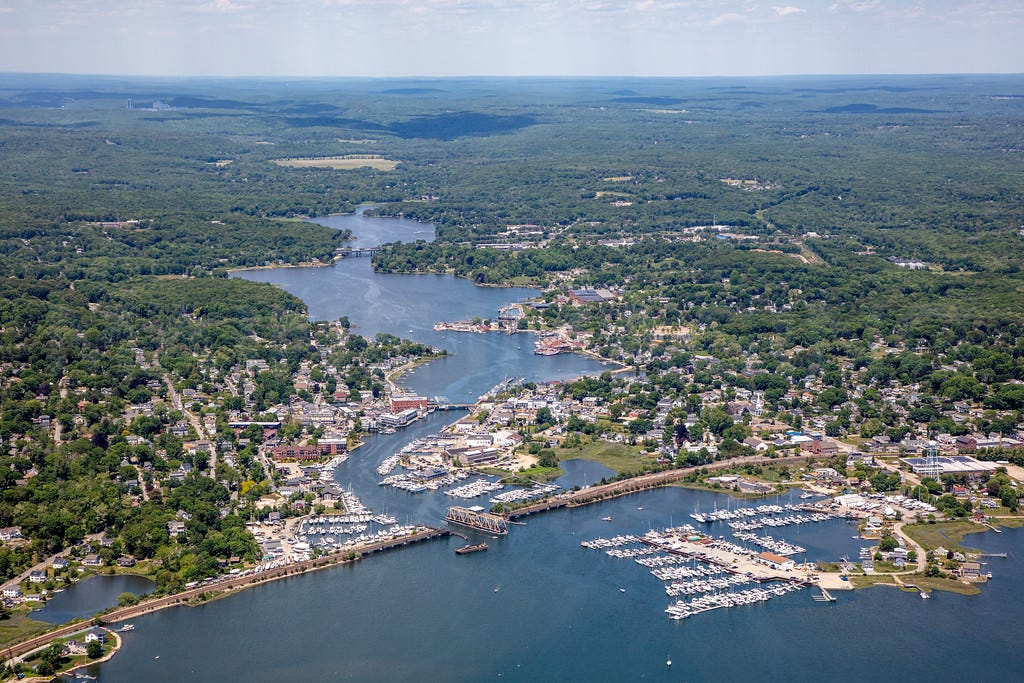
The Alliance was conceived through a mutual recognition of shared ecological responsibility for the watershed. Its bylaws enshrine tribal sovereignty by granting Indigenous representatives equal decision-making power alongside municipal and youth leaders—an explicit departure from the token advisory roles often found in environmental coalitions. Regular convenings bring together town officials and tribal members to plan, coordinate, and resolve issues collaboratively—ensuring that dialogue remains continuous and power is distributed rather than centralized. What makes this coalition distinct is its grounding in relationship and reciprocity: the watershed is treated not as a resource to be managed, but as a living relative whose care unites communities across historic divides. The Mystic River Watershed Alliance is, in practice, a bioregional expression of the same Indigenous trade revitalization described earlier—centering Indigenous governance, restoring relational economies, and rebuilding shared infrastructure for collective flourishing.
Different Paths, Common Threads
How do we expand this model and deepen these coalitions? We know from the scientific study of resilient social-ecological systems that diverse, patchy, mosaiced forms, connected in networks, lead to system resilience. Each of our bioregions and each Indigenous nation’s homeland and community make up facets of our nested mosaics. We are different, diverse in nature, cosmology, and history, holding different visions, intellectual pathways, and sources of creativity.
The bioregional movement and the movement for Indigenous economic restoration have different paths to walk. Indigenous economic restoration centers on healing the hearts of our people, bringing to contemporary practice the knowledge and ways of life that have guided our people from time immemorial, and ensuring the return of our land tenure and political and social power that allow us to live our teachings. The bioregional movement centers on cultural transformation, healing from colonialism’s disconnection from land and community, working towards justice, and restoring relational, localized ways of life and equitable trade across communities.
But we have common threads to weave together to contribute to the whole. Whether you come from an Indigenous perspective, a bioregional one, both, or neither—the work ahead requires understanding the differences between these movements, their synergies, the historical tensions, and the ways of being in right relationship. This means building trustworthy relationships through the principles outlined here. It means attending convenings where Indigenous and bioregional organizers are in dialogue; reaching out to Indigenous communities with clear protocols, humility, and long-term commitment; establishing trade agreements that support Indigenous economic infrastructure; and advocating policy that advances both Indigenous sovereignty and bioregional resilience.
As Donna Morton of Salmon Returns (a bioregional initiative based in the Pacific Northwest) recently shared: “We see our work as a collective, a weave. We are from different places, different edges, different approaches….As we pull back, we see the weave, the beauty, the pattern, and the purpose we are serving to support life together.”
May we work toward a future of communities patterned as mosaics, growing and expanding our networks slowly, with trust and richness, as the Smokehouse Collective does. May we share resources between us like mycelial webs, each giving and taking according to our capacities and needs, not one dominating the other, like the Alliance for the Mystic River Watershed. May we support Indigenous communities to revive and thrive while learning to be a non-invasive species, as the best of our bioregional initiatives are starting to do. May we bravely face the healing and inner transformations needed to see these new worlds and link arms across difference. May we become more rooted and networked to weather the shifts and changes coming our way.

this settles in me with ease
I wrote about how the first marketplace was a campfire. The idea that modern highways are paved-over Indigenous trade routes that once connected hubs for reciprocal exchange is something I'd never considered. The infrastructure predates everything we built on top of it. Really fascinating piece.